

Not everything you see is real. Some thoughts about AI, creativity and the world we are creating.

AI. Artificial intelligence.
It seems to be everywhere these days, does it not?
Almost every week, somebody tells us how much AI has changed their life. How they can now do things faster, create more content, work more efficiently and achieve things that would previously have taken hours.
And yes, I can see why people find it useful.
But there is one question that keeps coming back to me.
Do we really need to do more, and do everything faster?
I know, I know. This is coming from the girl who always has a million ideas, a million projects and never enough hours in the day to finish them all! 😃
Perhaps that is exactly why I am asking.

Paul and I have built a life in Lapland that is, in many ways, quite different from the world we left behind in London. We run a small business, work incredibly hard and certainly do not spend our days sitting around doing nothing.
But we also believe in slowing down. In taking time to do things properly. In appreciating the process, not just the finished result.
And I sometimes wonder whether our constant desire to make everything quicker and easier is actually making our lives better. And for those that embrace all this AI efficiency, do you actually have any more free time than you did before?
Please do not misunderstand me. I am not against technology or progress. I know we need to adapt, and I can see how AI can be helpful.
But I have been thinking a lot about the other side of it.
About creativity, originality, trust and something that is becoming increasingly important:
Not everything you see is real.

Before I go any further, I want to explain something about Foxfires.
We do not use AI to create our photographs, videos, articles or travel guides. What we share comes from our own experiences, research, creativity and knowledge gained from living here in Lapland. We type every word by hand, with no assistant.
Of course, we use technology to help run our business, but when you see a photograph of Foxfires or read about our experiences, you are seeing and reading something real.
And that distinction is becoming increasingly important to us.

When inspiration becomes copying
This is something I feel particularly strongly about.
There have always been people who inspire others. Artists, photographers, writers, designers, small business owners and creators who share their work with the world.
And I think that inspiration is wonderful.
Take Apple and its product designs over the last 30 years. They have been heavily influenced by the work of Dieter Rams, who led design at Braun from the 1960s to the mid-1990s. You could almost argue that some designs were copied. Yet we do not think Rams receives nearly enough credit for his visionary work.
We all find inspiration in other people’s ideas. But there is a difference between being inspired by somebody and copying what they have created.
And that difference matters.

Today, with the help of AI, it has become easier than ever to take somebody else’s work and turn it into something that looks like your own.
You can take an article, a social media post or somebody’s carefully researched knowledge and ask AI to rewrite it in a different style. Change the words, rearrange the sentences, perhaps add a few personal touches.
And suddenly it looks like original content. But is it?
I see people describing themselves as creative, while some of the work they publish is based heavily on ideas and knowledge developed by others.
Of course, using AI does not automatically mean somebody is copying. There are many ways to use technology creatively.
But taking somebody else’s knowledge, asking AI to adapt it to your own style and then presenting the result as your original expertise?
Is that creativity, or is it copying? We all know the answer.
The words might be different, but the ideas, research and experience behind them still came from somebody else. And I think that deserves more consideration than it sometimes receives.

We have experienced this ourselves at Foxfires.
Over the years, Paul and I have spent an enormous amount of time learning about Lapland, exploring places, researching subjects, writing articles and creating Our Winter Guide to Levi Lapland.
We share much of that knowledge because we want to help people plan their Lapland holidays, make their research easier and benefit from what we have learnt by living here. Good local information can save people a great deal of time, money and unnecessary mistakes.
And we are happy when our information helps others.
What is harder to accept is seeing our work, ideas and knowledge repeatedly repackaged by other people and presented as their own expertise.
Sometimes the wording changes. Sometimes the presentation changes. But when you have spent hours, days or even years developing something, you recognise where it came from.
And it is frustrating.
Not because we believe we are the only people entitled to talk about Lapland. Of course not! There are many knowledgeable people here, and everyone has their own experiences and perspectives to share.
But because there is a difference between sharing what you have learnt from somebody and presenting somebody else’s work as your own.

I have heard people say that imitation is the highest form of flattery.
I have never really liked that expression. For me, it is sad when somebody puts so much energy into recreating another person’s ideas instead of developing their own.
And this is not just about Foxfires. It happens to creators everywhere. And has done for years. Look at the world of fine art. Forgery goes back hundreds of years. Some are so good they are virtually undetectable. But if the forger is that good at art why not create their own art? Creativity is harder than copying.
There is enough room for different voices, different perspectives and different ways of creating.
Would it not be more interesting if people spent that time developing their own ideas, rather than waiting to see what somebody else creates and then making their own version of it?
And despite my frustration, there is one thing I try to remember: at least some of the messages we care about are reaching more people, even when they are being shared through somebody else’s voice.
I just wish the original work behind them received a little more respect.
What happens to art when everything can be recreated?
Another part of AI development that makes me very sad is what is happening to artists and craftspeople.
I follow many talented artists whose work I genuinely admire. People who have spent years learning their craft, developing a recognisable style and creating something that feels entirely their own.
And now we are seeing work that imitates those styles being produced in seconds.
Sometimes it goes beyond imitation. AI tools can also be used to reproduce or closely copy existing artwork, making it easier for somebody to present a version of another person’s creation as something new.
Of course, copying art existed long before AI. But technology has made certain kinds of imitation much easier and faster. And there is another problem.
Some large online shops sell very cheap copies of products and designs originally created by independent artists.
People see something at a fraction of the original price and buy it. And I think many do not even realise that the design may have been copied from somebody who spent years developing their work. I understand why a low price is tempting. But behind that original design is a real person whose creativity has been used without their permission.

And I think we sometimes forget what goes into creating an original piece. It is not simply the time spent painting, sewing, sculpting or making the finished object.
It is the years of learning.
The failed attempts.
The experiments.
The hours spent developing an idea, changing details and trying again.
The experience, imagination and personal perspective that make somebody’s work recognisable.
When you buy something handmade or created by an independent artist, you are supporting much more than the physical object. You are supporting that person’s creativity and the work that made it possible.
We see this closely through Our Little Gift Shop at Foxfires, where we work with handmade pieces and people who put enormous care into what they create.
Perhaps that is why I feel so strongly about it.
I do not believe that every use of AI in art is wrong. Artists themselves may find interesting ways to use new technology.
But there is a difference between using a tool to explore your own ideas and using it to reproduce somebody else’s distinctive work without their permission.
So perhaps before buying something simply because it is cheap, we should ask ourselves who actually created it.
We would never knowingly support somebody making money from copying another artist's work.
Those choices matter, particularly for independent artists whose livelihoods depend on their work.

The people you follow might not even exist
Now we come to something that really worries me.
AI-generated people.
Not cartoon characters or obviously fictional illustrations. I mean people who look completely real. They have Instagram accounts, photographs, videos, stories about their lives and sometimes enormous audiences. They might show their beautiful home, their travels, their fitness journey or an extraordinary personal transformation. You watch their videos and feel as though you are following a real person.
Except that person does not exist. And many people watching may have no idea. What makes this very concerning is that some of these accounts are used to sell products.
Imagine following somebody who shares their incredible weight-loss journey, a dramatic change in their appearance or the results of a wellness routine. They show you before-and-after photographs or videos, talk about their personal experience and recommend a product that supposedly helped them achieve those results.
But the person is AI-generated. The transformation never happened. And the experience being presented as evidence is fictional. Yet real people may spend money on those products, believe the claims and potentially put their health at risk.
That is not simply a question of creativity or entertainment. It is a question of consumer protection and safety.

I strongly believe that the use of artificial people and fabricated personal experiences in advertising, particularly for health, beauty and wellness products, needs clear rules and effective regulation as soon as possible.
People should know when they are being shown something artificial, especially when it is being used to influence their decisions about their health.
And there is another side to this.
Real creators have found their photographs or videos being used without permission, with AI replacing their faces or altering their identities. Their work, movements and personality become the basis for somebody else’s artificial character.
I follow a creator on Instagram who has experienced this herself. She shared a reel explaining what happened, and I think it is worth watching because it shows how easily somebody’s original content can be misused: Denise Boomkens.
Think about that for a moment. You spend years building an audience and sharing your life, only for somebody to take your content, change your face and use it to create an entirely different identity.
I find that frightening.
And I think it is something everyone using social media should be aware of. We have learnt to question whether photographs have been edited. Now we also need to ask whether the person in the photograph exists at all.

When Lapland becomes more beautiful than reality
Let us bring this conversation back to Lapland.
Because we are seeing something here that concerns us very much.
AI-generated travel photographs and videos.
Beautiful cabins surrounded by perfect snow-covered trees. Northern Lights in colours and shapes that look more like fantasy illustrations. Landscapes where everything is perfectly arranged, every tree is covered in thick snow and the sky glows in extraordinary colours. And, of course, a group of reindeer standing in exactly the right place, all looking directly into the camera! 😃
Some of these images are beautiful. But some of them are not photographs of real places or real moments.
And the interesting thing is that Lapland really can look almost unreal. We know that very well. Sometimes people even comment on our own Foxfires photographs and videos, asking whether they were created with AI.
They were not.

I remember photographing our Orava cabin in winter. Paul and I looked at one of the photographs on my camera, and we both said that it almost looked like something AI had created!
The snow, the light, the Aurora, the cabin and the forest looked so perfect together.
But it was real.
That is the beauty of Lapland. Sometimes nature creates scenes that are almost difficult to believe.
And that is exactly why I find artificial travel imagery so frustrating.
We do not need to invent a more beautiful Lapland. The real one is already extraordinary.

We have seen AI-generated imagery used to promote accommodation and travel experiences in Lapland, including in the marketing of newer developments. There is of course a temptation to show a beautiful vision of a place, often before a project is finished. Architectural visualisations have been used for years, and there is nothing wrong with showing people what a future building is expected to look like.
But we believe there is an important responsibility to make it clear when an image is a visualisation or AI-generated rather than a photograph. Especially when somebody is making a booking based on what they see.
There is a big difference between showing a realistic impression of a future property and creating an artificial winter paradise that may never look like that in reality. And unfortunately, we see a lot AI-generated images of Lapland, accommodation and activities being shared without clear labels.
One example that caught our attention was a hotel development in Lapland whose promotional images showed its cabins against a mountainous landscape that looked Norwegian rather than Lappish.
Imagine booking accommodation because you love the scenery in the photographs, only to arrive and discover that the surroundings are completely different! This is not just about making a photograph look prettier. It can create expectations about a place that simply cannot be met.

We have taken a different approach at Foxfires.
When we opened the booking calendar for our Orava cabin, we did not have finished interior photographs to show. We could have created beautiful AI images showing what the cabin might look like.
But we decided not to.
We want to be real in every aspect of what we do and what we present.
Instead, we explained the design, shared the story of building the cabin and asked people to wait until everything was finished and I could photograph the real interior. We have taken exactly the same approach with our new Pupu cabin. Its booking calendar is already open, but we are waiting until the cabin is ready before sharing real photographs.
And just as with Orava, people have already booked Pupu without seeing the finished interior.
That trust means a lot to us. Thank you.

We have also been approached by websites promoting Lapland experiences that wanted to include Foxfires. At first, that might sound like a good opportunity for a small business. But when we looked at the websites, we found polished AI-generated imagery being used throughout, rather than genuine photographs of the destination and experiences. There were already other businesses featured on them.
We declined.
We do not want Foxfires promoted through imagery that creates a false impression of Lapland.
And there is another experience that has made us particularly protective of our own content.
Some large social media accounts have taken our original videos, changed them using AI and published them. In one case, the trees surrounding our kota were removed. The account tagged Foxfires and wrote a nice description, although some information was incorrect. We asked for the post to be removed completely. We do not want anyone using AI to “improve” our photographs or videos. We want people to see Foxfires exactly as it is, without anything added, removed or made to look more appealing.

We are proud of the place we have created.
We do not need somebody to remove the forest or artificially improve the surroundings to make it more appealing.
We want people to see Foxfires as it really is.
Lapland is a real place, not an AI-created fantasy
If you have followed Foxfires for a while, you will know that we often talk about managing expectations when travelling to Lapland. And we mean it.
Lapland can be extraordinarily beautiful.
There are mornings when we look outside and everything seems almost unreal. The trees are covered in snow, the sky turns soft shades of pink and blue, and the forest looks like something from a fairytale. We photograph and film those moments because we love sharing them. And yes, those photographs are real.
But that is not what every winter day looks like.

Sometimes the sky is grey.
Sometimes the wind removes the snow from the trees.
Sometimes the beautiful white landscape looks rather monochromatic.
Sometimes the weather changes completely overnight.
That is Lapland too.
And we deliberately show those days on our Instagram account.

You might remember some of our videos comparing beautiful, snow-covered winter scenes with the very different conditions we experience on other days. The same place. The same winter. Sometimes even just a short time apart.
We share those comparisons because we want people to understand that Lapland is not permanently covered in pink skies and perfectly snowy trees.
Not because we want to discourage people from visiting. Quite the opposite.
We want people to arrive with realistic expectations and appreciate Lapland for what it actually is. Mother Nature decides what each day will look like. We do not. And that is part of what makes living here so interesting.
But imagine what happens when travellers begin comparing the real landscape not just with carefully selected photographs, but with images that were never real in the first place.
Imagine arriving in Lapland after seeing hundreds of beautiful photographs online. And you are lucky. Everything is covered in fresh snow. The winter light is incredible, the sky turns pink and the landscape looks almost unreal. Then, one evening, the sky is clear and you even see the Northern Lights! But instead of being very happy, you feel disappointed. Why? Because the Northern Lights do not look like the photograph you saved before your holiday. The one showing an enormous, completely pink Aurora stretching across the sky, labelled simply “Lapland”. Except that photograph was created with AI. Imagine experiencing something as special as the Northern Lights and feeling disappointed because you are comparing it with something that never happened.
How can reality possibly compete with a world where every detail has been artificially perfected?
We think that is an important question for everyone involved in tourism.
We should be helping people fall in love with real places, not selling them an artificial version that reality cannot live up to.

Can you trust AI to plan your holiday?
Of course, AI is not only being used to create images and content. More and more people are using tools such as ChatGPT to plan their holidays.
You can ask questions about a destination, compare possible itineraries, learn about transport options and organise your ideas. And I understand why people are tempted to use it. Planning a holiday can take a lot of time, and getting answers to all your questions within seconds sounds very convenient.
But there is something important to remember.
An answer can sound convincing without being correct.
AI can give you an itinerary that sounds wonderful but is completely unrealistic. It might suggest driving hundreds of kilometres between activities in the middle of winter, recommend visiting places that are inaccessible at that time of year or tell you that you can rely on public transport where no suitable connection exists.
It might even suggest planning your evening around seeing the Northern Lights at a particular time, as though nature follows a timetable.
And when somebody has only a few days in Lapland, mistakes like these can mean wasted money, missed experiences and a great deal of frustration.
Last winter, we received several questions from people who had been told by AI that a particular date would be especially good for seeing the Northern Lights. I started making a note of those dates so I could check what the weather and space weather conditions would actually be like on each of those days. There were five enquiries in total, and four of those five dates turned out to be very cloudy across Lapland, so the Northern Lights were not visible. Of course, nobody can predict the weather or Northern Lights with certainty so far in advance.
But that is exactly the problem. AI can give people very confident answers about things that simply cannot be predicted that way. Imagine planning your entire holiday around one of those dates because AI told you it was the best time to see the Northern Lights.

It also matters when you are choosing activities or accommodation.
Imagine asking AI for the best husky experience, Northern Lights tour or accommodation in Levi. You might receive a confident list of recommendations.
But how were those businesses selected?
Has the system actually experienced any of them? Does it know which operators provide small, personal experiences, which are locally owned or how their services differ?
Not necessarily.
AI can draw on published information, but it does not have personal experience of visiting a business or taking part in an activity. And a recommendation that appears near the top of an AI-generated list is not automatically the best choice for you.
What about small, independent businesses?
This is another aspect that concerns us.
Small, family-run businesses often have limited time and resources to invest in marketing, websites and making themselves visible online. Larger businesses may have much more content, stronger online visibility and greater resources to promote themselves.
That can influence what information AI systems find and use.
It does not mean AI always recommends larger companies. Different tools work differently, and their recommendations can vary depending on the question and the information available.
But it does mean that a list of AI recommendations should not be mistaken for a complete picture of what a destination offers.
Some of the most interesting experiences are run by small local businesses that may not appear at all in a search. And if travellers rely entirely on the first recommendations they receive, those businesses are often overlooked.

This is one reason we always encourage visitors to look beyond the most visible companies.
Find out who operates an experience. Read about their approach and values. Look at whether it matches what you are hoping for.
And please consider supporting genuinely local businesses where possible.
Not because every small company is automatically better, but because these businesses are often an important part of what makes a destination special. They are run by people who live in the community, know the area through their own experiences and have often built their businesses around something they genuinely care about.
They may offer a more personal approach, share knowledge that is difficult to find elsewhere and introduce visitors to a different side of the destination.
Supporting them also helps keep more of the benefits of tourism within the local community.
And we think that matters enormously.

How to use AI without relying on it for everything
I do not think the answer is to stop using AI. It can be useful, and I am sure it will become part of many more areas of our lives.
But I think we need to become more thoughtful about how we use it.
If you are planning a holiday, AI can help you organise your research and identify questions you may not have considered. For example, instead of simply asking it to plan five days in Lapland, tell it what matters to you. Perhaps you prefer peaceful places, independent accommodation, local businesses and time in nature rather than a packed itinerary. Ask it to consider transport, distances and the time of year. And then always check the important information.
Look for genuine first-hand accounts from people who know the destination.
And do not assume that a beautifully written answer is necessarily a well-researched one. You can also ask AI to distinguish between verified information, assumptions and suggestions. That does not guarantee accuracy, but it can help you recognise what still needs checking.
The same principle applies beyond travel.
If you are considering buying something because of a video you have seen online, take a moment to investigate.
Is the person real?
Is the experience genuine?
Does the photograph show an actual product or place?
Who created the information, and what are they trying to sell you?
These are questions worth asking more often.

Why real knowledge and personal experience still matter
When Paul and I moved to Lapland in 2018, we knew we had a lot to learn.
And we did.
We have spent years exploring this part of the world, experiencing its changing seasons, meeting local people, learning about the Northern Lights and discovering the practical details that make such a difference to visitors.
That knowledge did not arrive instantly.
It came from living here, making mistakes, asking questions, researching and experiencing things ourselves.
It is the foundation of what we share through Foxfires.
We use our Instagram account not only to share photographs and videos, but also to help people plan and prepare for their Lapland holidays. We share our local knowledge, explain things that visitors might not know and help them understand this part of Lapland better before they arrive.
The same applies to our blog articles.
We spend time writing them because we want people to understand this destination better and make informed decisions when planning their holidays.

And it is why we created Our Winter Guide to Levi Lapland.
We wanted to bring together the information we had learnt over the years and make it genuinely useful for independent travellers. Not simply produce another list of popular activities, but explain the details that help people make decisions. It is built around the questions travellers actually ask, the things they often overlook when planning and the knowledge that comes from spending years living in and exploring Lapland.
It is the kind of information we wish we could have had when we first started discovering this place ourselves. We put our own knowledge, research and experiences into these resources because we believe they have value.
AI can certainly help somebody organise their holiday using that kind of information. But the information itself still has to come from somewhere.
Behind a useful article, a detailed guide, a beautiful photograph or a carefully made object, there is often a real person who has spent a great deal of time creating it.
And we think we should value that.
Perhaps we should slow down a little
I keep coming back to the question I asked at the beginning.
Do we really need to do more and faster?
I know technology will continue to develop. I know AI can make many tasks easier, and I am not suggesting we should ignore it.
But I hope we do not reach a point where speed becomes more important than thought, quantity becomes more important than quality and imitation becomes an acceptable substitute for creativity.
I hope we continue to value people who take time to learn something properly.
Artists who develop their own style.
Writers who have something original to say.
Small businesses built around genuine knowledge, passion and personal experience.
And people who are willing to show the world as it really is, rather than how an algorithm might prefer it to look.
Most of all, I hope we become a little more aware of what we are seeing online. Because a beautiful image is not necessarily a real photograph. A convincing personal story is not necessarily true. A popular account is not necessarily run by the person you think it is. And a confident recommendation is not necessarily based on genuine knowledge.

Not everything you see is real.
That does not mean we should stop trusting people or enjoying what technology makes possible.
But perhaps we should ask more questions, look a little closer and be more thoughtful about what we believe, share and support.
And when we find something genuinely original, something created with care, knowledge and passion, perhaps we should appreciate it a little more.
Because in a world where almost anything can be copied or artificially created, the real thing becomes even more valuable.
We would love to hear what you think about this subject. Perhaps you use AI every day and see it very differently. Perhaps you share some of our concerns, or have experiences of your own.
Please share your thoughts with us. We would genuinely welcome different perspectives.
Thank you for reading.
Aggie, Paul & Gooseberry
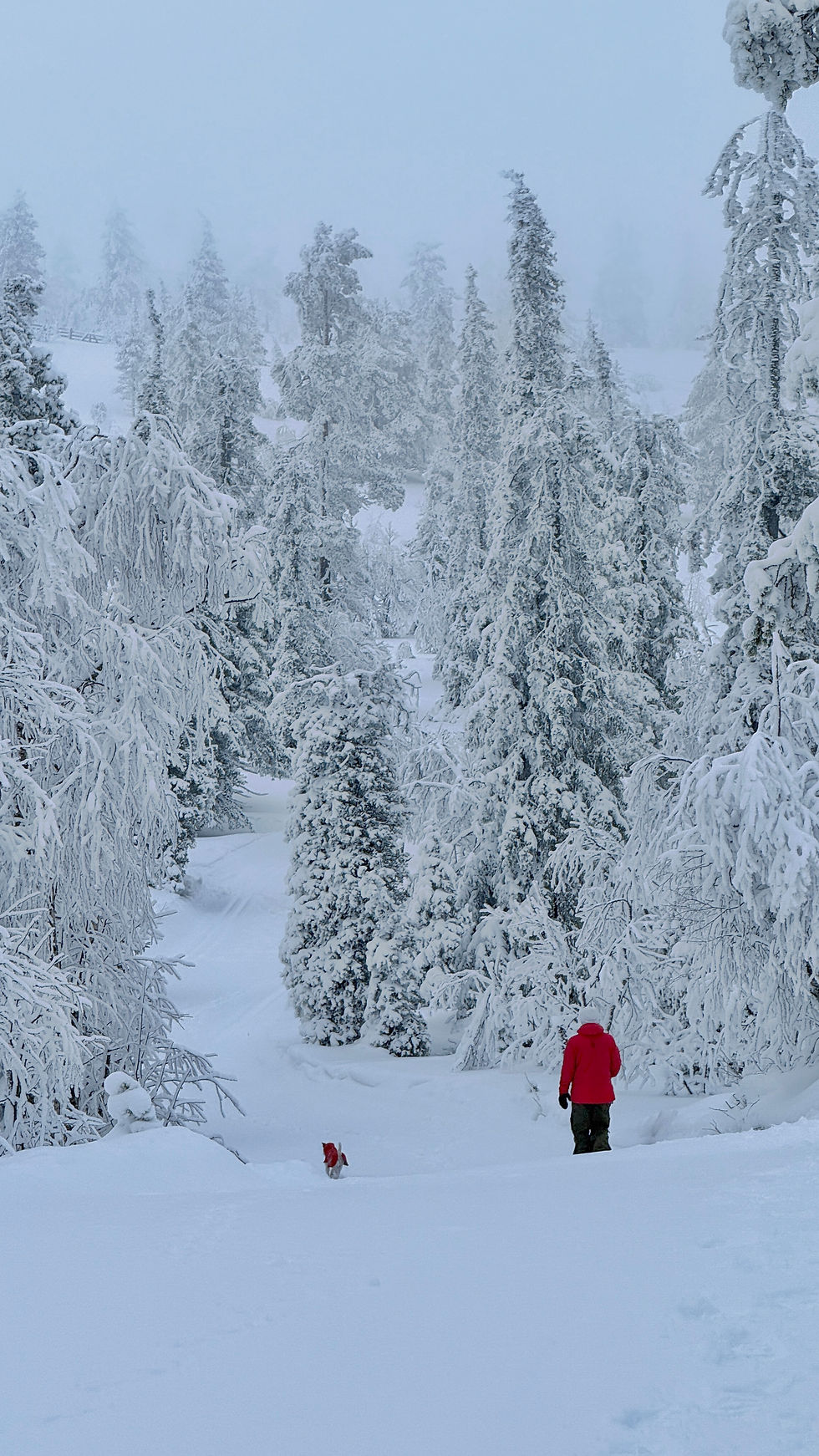
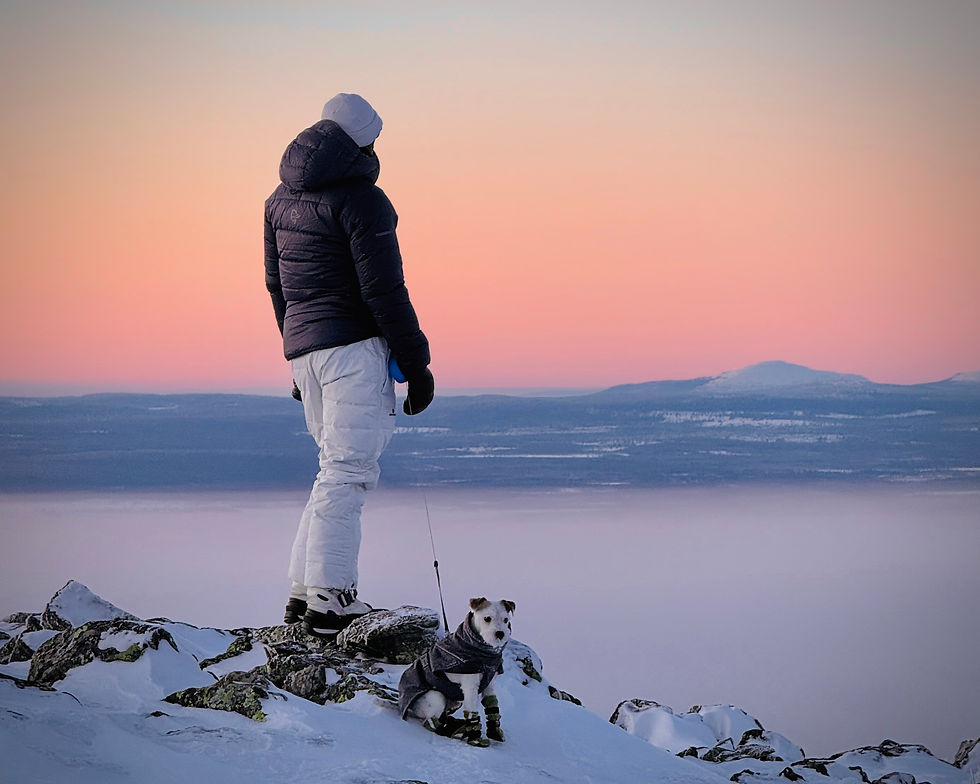
All photographs in this article were taken by us in Lapland, where we have lived since 2018, with one exception: the photograph of Paul and Gooseberry, in which I used AI to turn Gooseberry into an Irish Terrier. The original photograph was also taken by me.


